
XRF Test Results for 360 Cookware’s Stainless Steel 1 Quart Saucepan





Published: November 16, 2025
A Note from Tamara Rubin:
As you may know (if you’ve been following our work for more than a couple of years), Lead Safe Mama Community Members have been clamoring for us to use XRF technology to test and report on the results for the 360 Cookware line of stainless steel pots and pans. We’ve always recommended using a mix of stainless steel, glass, and cast iron cookware (more on that here), and so our online community is constantly on the lookout for new good stainless steel choices for us to evaluate (and specifically for us to test using XRF technology).
Given our primary focus (since March of 2024) has been on the Lead Safe Mama, LLC Community Collaborative Laboratory Testing Initiative (independent, third-party laboratory testing of foods, supplements and personal care products nominated by and funded by our community) — we simply have not had a moment to dive back into new XRF testing projects until recently.
In addition to gentle “pressure” 😉 from the community to have us test 360 Cookware products, over the past couple of years I have also had several wonderful conversations with Bryan who, with his wife Beth, own 360 Cookware.
I have been very impressed with Bryan and Beth’s personal commitment to making cleaner cookware products that are safer for use by families — while also sourcing as much of the materials for their cookware in the USA as possible! Bryan, Beth and I are 100% aligned in our concerns for the toxicity of the popular faux “ceramic” coatings found on so many pots and pans (Caraway, Always Pan, Green Pan, etc.) these days — not to mention the fact that nearly all of these pans are made of Lead-contaminated Aluminum (under the “ceramic” coating).
If you are not familiar with Lead Safe Mama, LLC’s work evaluating the scope of the issue and investigating this concern, The Guardian wrote a great overview piece (linking our work in this area) in June of 2025. Here’s the link to that article.
After The Guardian article came out, Bryan called me to check in (he was just as thrilled as I was about how comprehensive that piece of investigative journalism was). We had a great chat about the specific concern for Titanium Dioxide being used as a primary ingredient in the coatings on these modern non-stick pans being sold as “ceramic”.
Titanium Dioxide is the primary colorant in these cookware coatings (as it also is with most house paint and other modern paints and coatings — since it began to replace Lead in the 1950s). Titanium Dioxide has also been recognized by regulatory agencies in Europe as a carcinogen. Titanium Dioxide simply does not belong on the food surface of pots and pans — especially when that food surface is expected to wear and become unusable (with planned obsolescence) within five years of purchase (and often sooner!)
Where does that microparticulate Titanium Dioxide (the scratches of material on the food surface of your coated pans — scraped off with your spatulas and other cooking utensils) end up? In your food and in your body! You can read more about the concern for Titanium Dioxide based coatings here.
In that call in June I asked Bryan if he could send us samples of his products to test and evaluate this year (as I thought I might have some time opening up to fit in some XRF testing) and he let me pick out anything from the 360 Cookware online shop that I wanted to test and report on. I chose several different products – each of which I thought would have a different mix of materials (stainless, pewter, wood composite, and more) — a representative grouping of products which would give us a good picture of the range of possible XRF test results for the 360 Cookware line as a whole.
Bryan & Beth (& 360 Cookware), Going Above & Beyond
The kind of response we want to see from companies!
Through this process I had the opportunity to test a set of measuring spoons that 360 Cookware was reselling for another manufacturer (not a 360 Cookware manufactured product). I chose to test this product as it was noted as being made of as modern “Pewter”, and that’s always a red flag for potential Lead and Antimony contamination (based on the nearly two decades of testing of consumer goods that I have personally conducted using XRF technology). Many manufacturers assume that “modern Pewter” is Lead-free, but that is simply almost never the case unfortunately. In some rare cases modern Pewter may be Lead-free (or very close to it), but in those cases the Lead has normally been replaced with Antimony, which is also a known carcinogen.
This measuring spoon product did test positive for Lead. I alerted Bryan and Beth to this concern and they immediately removed the product from their website (and they also let us know that – based on this new information – they won’t be offering any other Pewter products for sale in the future!)
All of the other products they sent us for testing tested incredibly clean (you can see the full set of test results for the 1-Quart saucepan below, and we will be publishing the test results for their Slow Cooker shortly too!), and we are very happy to be able to share the test results for an example of their stainless steel cookware with all of you here today. The XRF readings below are representative of what the XRF readings are for their other Stainless Steel products as well, so we are sharing the results of this specific saucepan to serve as an example of what you can expect with their cookware.
360 Cookware’s quick response to the issue with the measuring spoons really won me over personally. Not only is 360 Cookware manufacturing clean, solid, heirloom quality stainless steel products — but they are 100% willing to put their “money where their mouth is” – walking the talk as it were! The function and design of their cookware is also exceptional, and we’ll be writing more about that soon.
As 360 Cookware is obviously an ethical company that is doing what they do for all the right reasons, we invited them to come on board as a sponsor of Lead Safe Mama, LLC, and earlier this month they joined us as an advertising partner for our email newsletter — a sponsorship that is helping us to cover the costs of our newsletter and also helping to cover the costs of some of the testing and reporting we are doing this winter (you can subscribe to the newsletter here, it’s free).We’re very picky about who we partner with (something we do by invitation only) and we now have just two corporate partners in our work – 360 Cookware and Naturepedic.
As a result of this new partnership with 360 Cookware you will see their banner at the top of every Lead Safe Mama newsletter from now until the end of 2025. They also created a discount code just for the Lead Safe Mama Community (YOU!) Start your 360 Cookware shopping with our link (here’s the link) and enter code “LeadSafeMama” for a 20% discount on anything you purchase from their site.
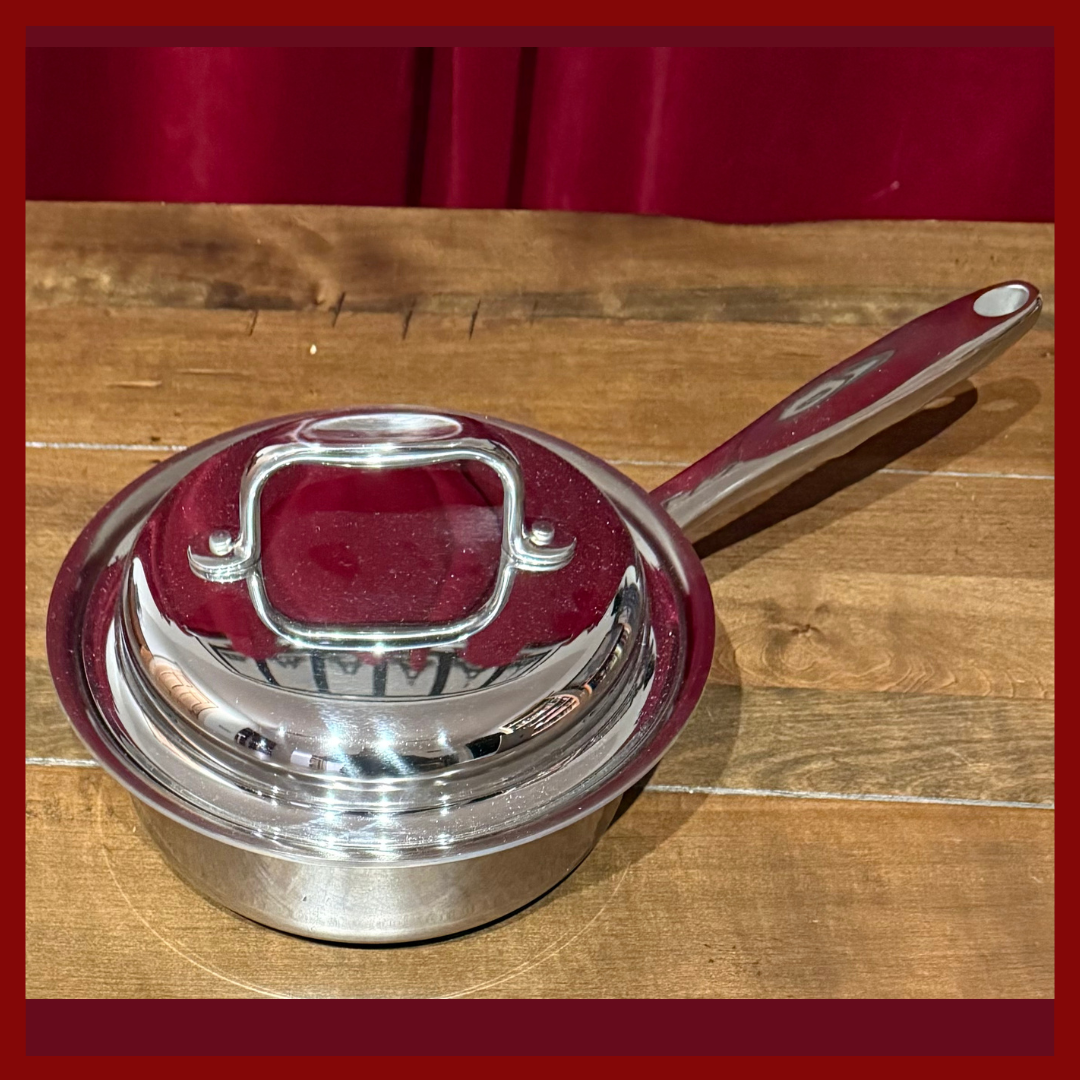
The full XRF test results for the saucepan pictured above are below. The saucepan came back “non-detect” (within the limits of detection of XRF technology) for Lead, Cadmium, Mercury, Arsenic, and Antimony in all components tested. The GUI interface on the XRF instrument let us know that the pan is a mix of 316 Stainless and 304 Stainless, which are two of the primary Stainless Steel alloys that one finds in most high quality Stainless Steel cookware. My husband and I are excited to be using these products in our own kitchen and also to have a USA based company (run by real people who are really interested in making a difference) that we can personally recommend to friends and family.
Please stand by for a second article with the full XRF test results for the 360 Cookware Slow Cooker (another heirloom quality product by 360 Cookware that we absolutely love – and have been using in our kitchen on a regular basis over the last couple of months!)
Note: The 360 Cookware pots and pans are not Nickel-free (although I am planning on talking to Bryan and Beth about what the options might be in that area for the future!) High quality stainless steel pans have been demonstrated (through independent scientific study) to be less reactive than inexpensive pots and pans – even if they do contain Nickel. You can read more about that here. If you are allergic to Nickel, we recommend that you not use any Stainless Steel products as even pots and pans marketed and sold as “Nickel Free” can legally contain up to 2,500 ppm Nickel (as an example, please see our test results for the “Noni” Solidteknics pans).
XRF Test Results for the pan pictured
– the 360 Cookware 1-Quart Saucepan
All readings are repeated multiple times to confirm the test results. One full set of readings for each component tested is listed below.
Continue Reading Below The Image
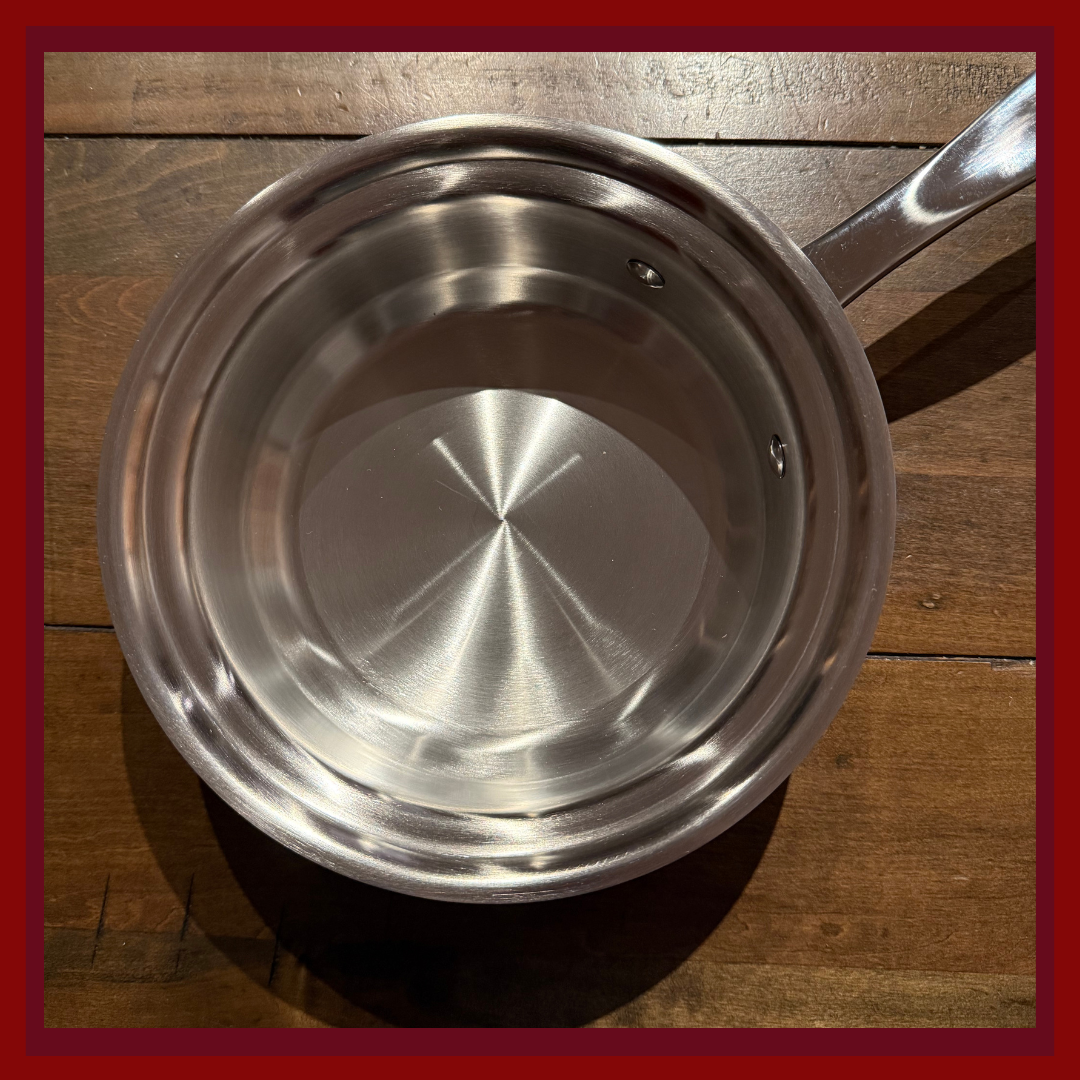
Reading #1) Inside Food Surface of Saucepan (Inside Bottom, Image Above)
60-Second Reading
Stainless Steel #316
- Lead (Pb): non-detect
- Cadmium (Cd): non-detect
- Mercury (Hg): non-detect
- Bromine (Br): non-detect
- Arsenic (As): non-detect
- Chromium (Cr): 165,700 +/- 1,200 ppm
- Vanadium (V): 1,408 +/- 406 ppm
- Iron (Fe): 690,200 +/- 2,000 ppm
- Cobalt (Co): 3,241 +/- 1,032 ppm
- Nickel (Ni): 101,100 +/- 1,400 ppm
- Copper (Cu): 2,961 +/- 282 ppm
- Molybdenum (Mo): 20,700 +/- 300 ppm
- Tin (Sn): 91 +/- 35 ppm
- Gold (Au): 290 +/- 142 ppm
- No other metals detected in Consumer Goods Mode
Continue Reading Below The Image
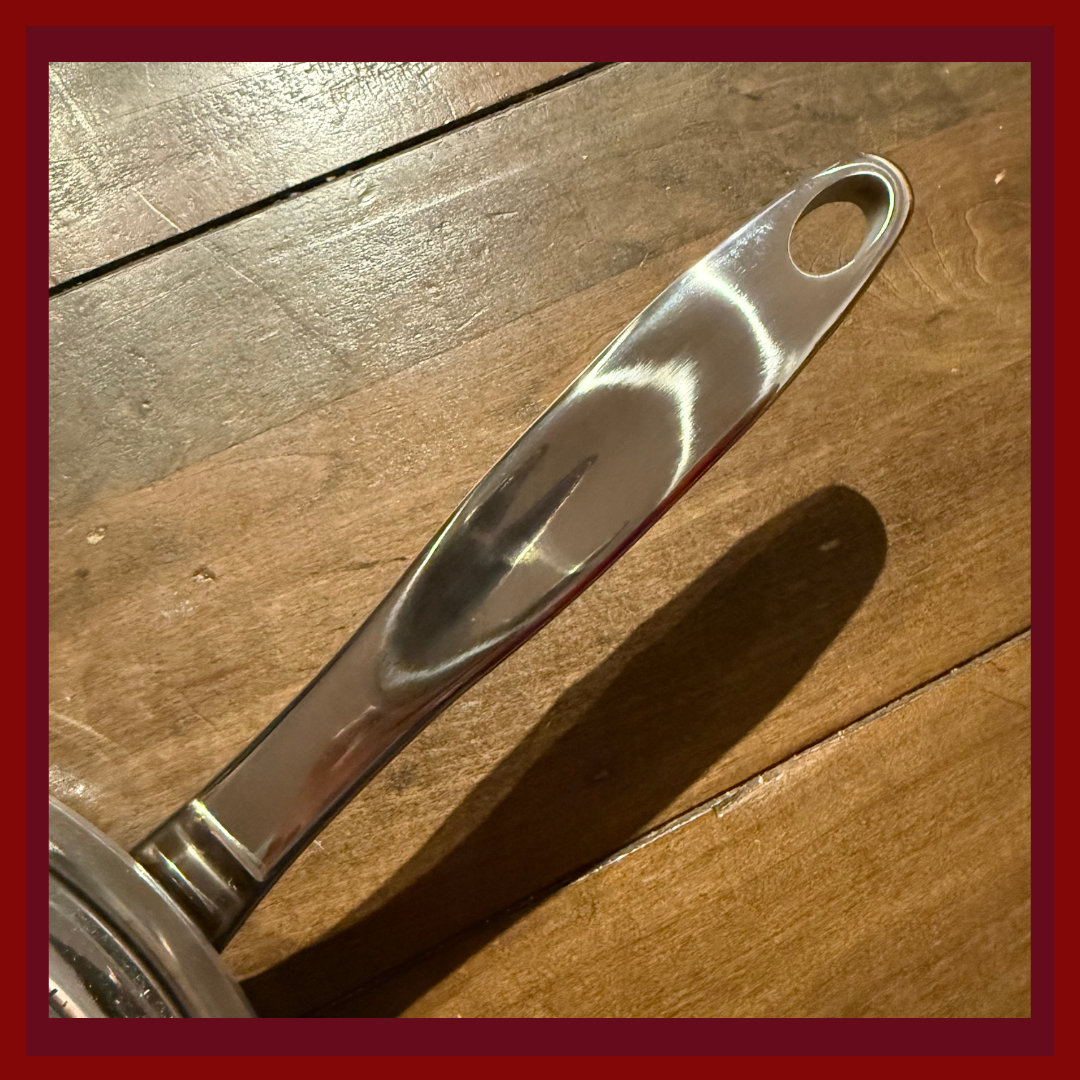
Reading #2) Long Handle Of Saucepan (Image Above)
60-Second Reading
Stainless Steel #304
- Lead (Pb): non-detect
- Cadmium (Cd): non-detect
- Mercury (Hg): non-detect
- Bromine (Br): non-detect
- Arsenic (As): non-detect
- Chromium (Cr): 179,700 +/- 1,100 ppm
- Manganese (Mn): 9,674 +/- 790 ppm
- Iron (Fe): 727,200 +/- 1,800 ppm
- Cobalt (Co): 2,701 +/- 961 ppm
- Nickel (Ni):79,300 +/- 1,100 ppm
- No other metals detected in Consumer Goods Mode
Continue Reading Below The Image
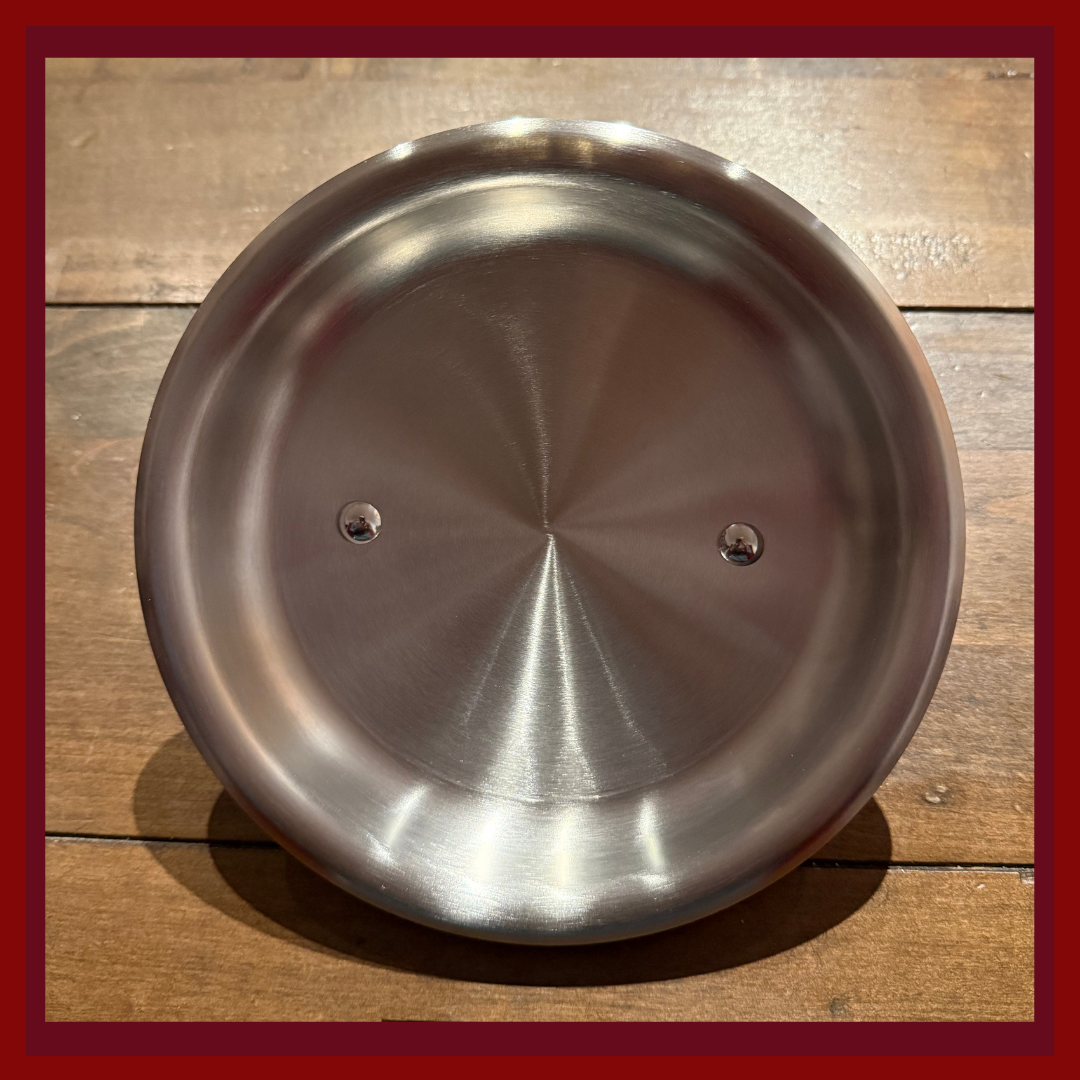
Reading #3) Inside (Food-Contact Surface) of Saucepan Lid (Image Above)
60-Second Reading
Stainless Steel #304
- Lead (Pb): non-detect
- Cadmium (Cd): non-detect
- Mercury (Hg): non-detect
- Bromine (Br): non-detect
- Arsenic (As): non-detect
- Chromium (Cr): 183,200 +/- 1,100 ppm
- Manganese (Mn): 17,900 +/- 800 ppm
- Iron (Fe): 704,000 +/- 1,800 ppm
- Cobalt (Co): 1,686 +/- 947 ppm
- Nickel (Ni):82,800 +/- 1,200 ppm
- Molybdenum (Mo): 3,743 +/- 120 ppm
- No other metals detected in Consumer Goods Mode
Additional Related Reading
- Our “Stainless Steel” Category of Articles
- Our overview article for how to choose safer pots and pans for your family
- Our “What is Stainless Steel” Article
- Our “Why does some Stainless Steel have a Prop 65 warning label on it” Article

Never Miss an Important Article Again!
Join our Email List
Just curious you’d previously tested the Hestan Nanobond saucepan and highlighted it for nickel levels which were lower than the nickel found in this 360 cookware. Is there a particular reason you didn’t emphasize the high nickel levels in this instance?
The Nickel levels are relatively consistent between these two brands (50,000 to 80,000 ppm – within that range is the same from a metals impact perspective).
Some people are looking for Nickel-free cookware, others are not.
Even cookware sold as “nickel free” (like the Solidteknics Noni stainless) still can test positive for Nickel. Legally pots and pans can have up to 2,500 ppm Nickel and still be labeled as “Nickel-Free”.
The Hestan had nickel levels in the food contact surface at about 55,600 ppm.
Independent studies have shown that high quality pans are less likely to leach than cheaply made products.
There’s more on that on this link:
https://tamararubin.com/2022/08/why-do-some-stainless-steel-cookware-items-have-a-prop-65-warning-isnt-stainless-steel-non-toxic/
And this link:
https://tamararubin.com/2024/04/how-to-clean-your-new-stainless-steel-pots-before-you-use-them-for-the-first-time/
If people have been informed by a doctor that they are allergic to Nickel, then they should avoid cooking in stainless and / or they should avoid long-form cooking in stainless (any stainless really).
T
Makes sense. Thanks for response 🙂
I have been investing in 360 for a few years now (worth every single cent!). I LOVE having this cookware and it will last forever and ever and ever. It is a pure pleasure to use it and every time I see it in my kitchen, it feels so good to know that I invested in me and my loved ones! If you are eating as cleanly as possible, this must extend to the products you use to prepare your food. Once I spent my money at 360, it was one and done, per item. I will never have to buy another pot or pan (unless I have a need for more 360!). I think, as maybe Bryan and Beth will see this, that it would be GREAT to make muffin pans. (I did once write to the company to suggest a truly stainless steel popover pan, as that doesn’t exist as far as I’ve searched). They were responsive that they would present my request to the management. It’s okay that it didn’t happen, as perhaps that’s not a scaleable item for them. In any case, all their stuff is TOPS TOPS TOPS. I marvel whenever I pick up a piece, at its heft and substantiality and excellent craftsmanship. It’s all such a pleasure to use. Just today, I ordered a second cookie sheet so I now have two. Kudos to this company! And no, I do not work for them! But I RAVE about companies like this who are so exceptional. Just one of the best companies ever!
Thank you for commenting, Joan!
I will make sure to share this with Bryan and Beth!
Tamara
Thank you!
So all these numbers are safe nothing to worry about. I was looking for a safe stainless steel brand my daughter has thyroid issues and has autism want something safe for her.
These are typical readings for high quality food-grade Stainless Steel (304 Stainless and 316 Stainless alloys specifically).
These alloys of Stainless Steel are considered safe by all standards, although some people may have diagnosed nickel allergies, and – if so – should avoid stainless steel posts and pans.
We use stainless steel pans every day in our home.
Please read the articles linked above (if you would like more information to help you make your decision).
Thank you!
T
I am a a new paid subscriber so maybe I’ve missed it but can you please post a key to your color coding? What is green? Blue? Also were these pans actually tested for Antimony?
Blue (and green) means it was detected – we just used the green to highlight there is nickel, so that those looking to avoid nickel notice it.
As noted with each reading set, no other metals were detected in consumer goods mode. only the metals noted in blue and green. This means no Antimony. I have never found any Antimony in Stainless Steel.
We typically only highlight “non-detects” for Lead, Cadmium, Mercury, and Arsenic – but the phrase “no other metals detected in consumer goods mode” covers the rest. Hopefully that clarifies things!
T
I would like to start investing in 360 pots and pans. I currently have a few All Clad D5 stainless pots. I saw a note that you stopped recommending this brand, but was that just in relation to the copper version or should I also reconsider using the ones I have? Thank you!
I have 360 brand as well. I enjoy my 4qt stainless steel pot.
I was under the impression that high levels of Chromium are bad as they have been linked to birth defects and miscarriages. Can you help me understand?
Chromium is in all stainless steel and is also in any modern tanned leather. In high quality stainless steel it is generally considered inert (they also use this in surgical applications), except under some possible extreme use circumstances. You can read more about that here: https://tamararubin.com/2022/08/why-do-some-stainless-steel-cookware-items-have-a-prop-65-warning-isnt-stainless-steel-non-toxic/
Tamara
Thanks so much for your work. I just placed an order.
Question: I received a “LeadSafeMama” discount. I am also military. Am I entitled to additional military discount. My Id came through after I had placed the order.
Thank you for your consideration.
Arthur Strock
Oh – I am not sure. I will share this with the owners and ask them.
Thank you!
T
I’ve been wanting to buy new cookware and am on their site, but I can’t find a steaming basket to go on the pots. I use a steam basket for veggies A LOT! Is there a compatible one that you can recommend to buy, or why don’t they have one?
Hi Tamara,
Thank you for your dedication to this important topic. I was keen to purchase a couple pieces of 360 cookware. To my dismay, their website isn’t accepting orders it seems and my emails have gone unanswered. Do you know anything of the status of this company?
Hmm – It is accepting orders today (my team double checked), perhaps there is an issue with your browser? Someone else told me today that they placed an order.
What kind of questions do you have?
T
Are you in Canada? I tried placing a large order and they won’t ship to Canada with the steel tariffs so I was frustrated as I was going to replace my entire set….
Oh such a bummer to hear! I will let the owner of the company know. I am speaking with him next week.
T